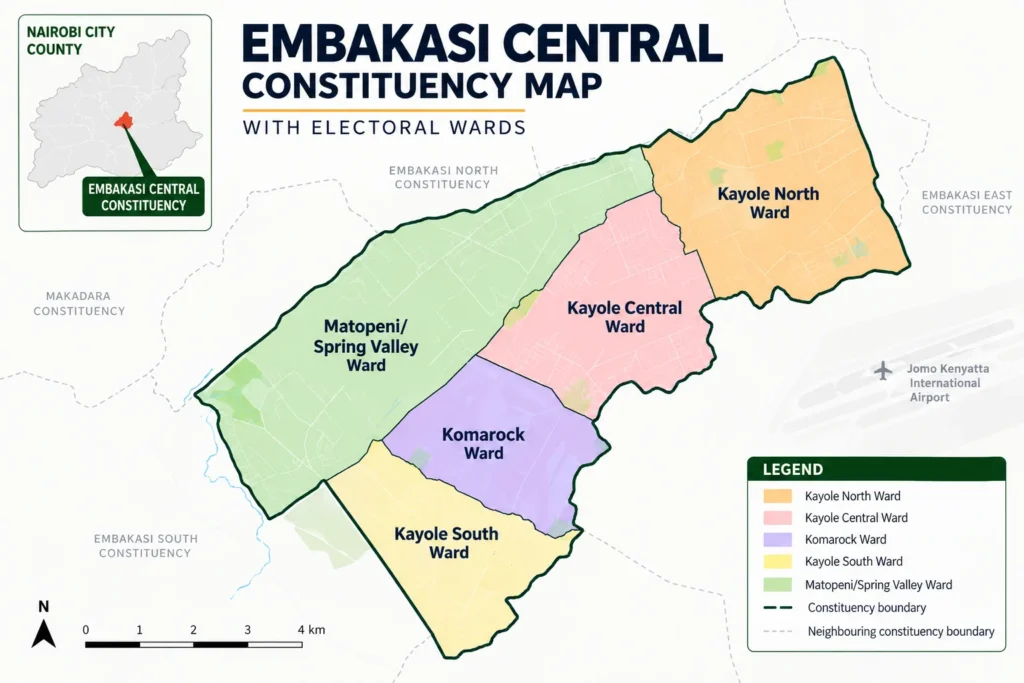
Embakasi Central’s parliamentary history is relatively short. Since the constituency first went to the polls in 2013, it has had two MPs and has moved through three different governing-party labels at the constituency level: TNA, Jubilee and UDA.
1. The Kariuki First Term: 2013–2017
Embakasi Central’s first parliamentary election in 2013 was won by John Ndirangu Kariuki of The National Alliance (TNA).
His victory established the constituency’s first representation in the National Assembly following the creation of Embakasi Central ahead of the 2013 election.
Kariuki served one term before losing the seat in 2017.
2. The 2017 Changeover
The 2017 General Election brought Embakasi Central its first change of MP.
Benjamin Gathiru Mwangi (Mejjadonk) won the parliamentary seat on a Jubilee Party ticket, replacing Kariuki after one term.
The election marked a change in individual representation while keeping the constituency within a party associated with the broader Jubilee political coalition of that period.
3. The Mejjadonk Era: 2017–Present
Mejjadonk retained the Embakasi Central seat in the 2022 General Election, giving him a second consecutive term in Parliament.
His second term also came under a different party banner. While he entered Parliament through Jubilee in 2017, Parliament currently lists him as a member of the United Democratic Alliance (UDA).
That means Embakasi Central has had the same MP since 2017, even as the party label attached to its parliamentary representation changed.
What the Trend Shows
Embakasi Central’s first three elections show more continuity in individual representation than the changing party labels might initially suggest.
The constituency changed MPs once—from John Ndirangu Kariuki to Benjamin Gathiru Mwangi in 2017. Mejjadonk then retained the seat in 2022 and is serving his second consecutive term.
At the same time, the parliamentary seat has been associated with TNA in 2013, Jubilee in 2017, and UDA in the current Parliament. That reflects changes in Kenya’s wider party landscape as well as the constituency’s own electoral history.
With only three parliamentary elections completed since Embakasi Central was created, there is still a limited record from which to identify longer-term voting patterns. The 2027 General Election will provide another point of comparison for whether the constituency continues with its current representation or undergoes another change.