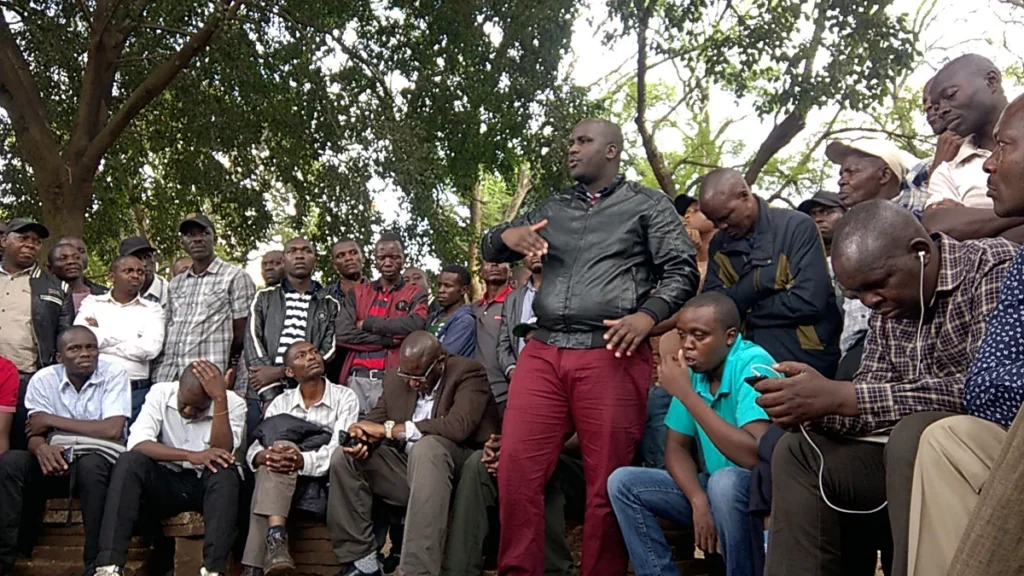
Public participation is more than attending a government meeting or signing an attendance sheet.
Under Kenya’s Constitution, citizens have a right to take part in decisions that affect them — from laws and taxes to county budgets, development plans and public policy.
The principle is firmly embedded in the Constitution. Yet more than fifteen years after the Constitution of Kenya 2010 came into force, an important question remains: does public participation give Kenyans meaningful influence over public decisions, or has it sometimes become a procedural requirement that institutions simply need to complete?
Court decisions, official audits, and budget transparency assessments point to a continuing gap between conducting public participation and making that participation meaningful.
The challenge is therefore no longer simply whether public participation happens. It is whether citizens receive enough information, enough time, and a genuine opportunity to influence the decisions being made.
Public Participation in Kenya: At a Glance
Constitutional basis: Articles 1, 10, 118, 196, 201 and 232 of the Constitution of Kenya, 2010, as well as the Fourth Schedule.
County framework: The County Governments Act, 2012 provides principles and mechanisms for citizen participation, including participation in county planning.
Public finance: The Public Finance Management Act, 2012 provides the statutory framework for public financial management at national and county levels, including mechanisms relevant to citizen participation in county financial matters.
National legislation: The Public Participation Bill, 2025 was approved by the National Assembly and subsequently moved to the Senate.
Current status: As of 29 September 2026, the Bill is before the Senate. On 23 September, the Senate invited members of the public to submit memoranda on the Bill through its Standing Committee on Justice, Legal Affairs and Human Rights.
Key principle from Kenyan courts: Public participation must be genuine and meaningful rather than merely a procedural formality.
Why Does Public Participation Matter in Kenya?
The Constitution begins with a simple principle: sovereign power belongs to the people of Kenya.
Article 1 provides that Kenyans can exercise that power directly or through democratically elected representatives.
Public participation is one of the practical ways citizens exercise the direct part of that power.
It gives people an opportunity to contribute to decisions about issues they encounter in everyday life: taxes, roads, healthcare, land use, water, education, county development projects, and the allocation of public resources.
Meaningful participation can also improve public decisions.
Residents often understand local problems in ways that officials working from national or county headquarters may not. A community can identify which road becomes impassable during the rainy season, which health facility lacks essential services, or which water project would make the biggest difference locally.
Public participation creates a formal route for that knowledge to enter government decision-making.
But holding a meeting is not enough.
If citizens receive a notice shortly before a meeting, cannot access the documents being discussed, do not understand highly technical proposals or never learn what happened to their submissions, the existence of a public forum does not necessarily mean they had meaningful influence.
What Does the Constitution Say About Public Participation?
Public participation does not depend on the goodwill of an individual government department or elected leader. It is rooted in the Constitution of Kenya, 2010.
Several provisions are particularly important.
Article 1(2) provides that the people may exercise their sovereign power either directly or through democratically elected representatives.
Article 10(2)(a) identifies democracy and participation of the people among Kenya’s national values and principles of governance.
Article 118 requires Parliament to conduct its business openly and facilitate public participation and involvement in its legislative and other business.
Article 196 places a similar obligation on county assemblies.
Article 201(a) requires openness and accountability, including public participation, in financial matters.
Article 232(1)(d) includes the involvement of the people in policy-making among the values and principles of public service.
The Fourth Schedule, Part 2 also gives county governments responsibility for ensuring and coordinating the participation of communities in governance at the local level.
Together, these provisions make public participation part of Kenya’s system of governance rather than an optional administrative exercise.
Which Laws Govern Public Participation in Kenya?
The Constitution provides the foundation, but several statutes explain how participation should operate in particular areas.
The County Governments Act, 2012, especially Sections 87–92 and 115, establishes principles of citizen participation and provides mechanisms through which residents can participate in county governance and planning.
The Public Finance Management Act, 2012 establishes the broader framework for managing public finances at national and county levels. Section 207 specifically requires county governments to establish structures, mechanisms and guidelines for citizen participation.
Counties have additionally developed their own public participation legislation, policies and mechanisms, although implementation differs between counties.
Kenya has, however, continued to debate the need for a comprehensive national framework setting minimum standards across public institutions.
That is the purpose of the Public Participation Bill, 2025 (National Assembly Bill No. 44 of 2025).
The National Assembly approved the Bill before it subsequently moved to the Senate.
On 23 September 2026, the Senate’s Standing Committee on Justice, Legal Affairs and Human Rights invited members of the public to submit written memoranda on the Bill by 28 September 2026.
The Bill seeks to provide a general framework for effective public participation, establish guiding principles and identify authorities responsible for developing participation guidelines within public institutions.
As of 29 September 2026, it has not become law.
How Does Public Participation Work in Practice?
There is no single public participation process covering every government decision.
The method depends on the institution and the decision being considered.
Parliament and National Legislation
Parliament regularly invites members of the public to submit memoranda on Bills and other matters before parliamentary committees.
Committees can also conduct public hearings and other forms of consultation.
Article 119 of the Constitution separately gives every person the right to petition Parliament to consider matters within its authority, including the enactment, amendment or repeal of legislation.
For citizens, participation may therefore involve attending a hearing, submitting a written memorandum or responding to a parliamentary invitation for views.
The current consideration of the Public Participation Bill provides a practical example. In September 2026, the Senate publicly invited written submissions as part of its consideration of the Bill.
County Planning and Budgeting
Public participation is particularly visible at county level.
Residents may be invited to participate in processes involving:
- County Integrated Development Plans (CIDPs);
- Annual Development Plans;
- County Fiscal Strategy Papers;
- county budget estimates; and
- other county policies, legislation and development priorities.
Participation may happen through ward meetings, public barazas, written submissions, stakeholder forums or digital platforms.
The quality of these processes, however, can vary considerably.
Formal Consultation Is Not the Same as Meaningful Participation
This distinction is central to understanding Kenya’s public participation debate.
Formal consultation can satisfy the visible steps of a process.
A notice is issued.
A meeting is organised.
People attend.
Their names are recorded.
A report may then state that public participation took place.
Meaningful participation asks deeper questions.
Did people know about the process early enough?
Could they access and understand what was being proposed?
Could people who were unable to attend a physical meeting still participate?
Were women, youth, persons with disabilities and marginalised communities able to contribute?
Were citizens’ views genuinely considered?
Did the institution explain what it accepted, rejected or changed?
Kenyan courts have repeatedly emphasised that public participation cannot be reduced to a box-ticking exercise.
What Have Kenyan Courts Said About Public Participation?
Kenyan courts have played an important role in explaining what meaningful public participation requires.
One of the landmark decisions is Gakuru & others v Governor Kiambu County & 3 others [2014] KEHC 7516 (KLR), commonly referred to as the Robert N. Gakuru case.
The case concerned, among other issues, whether the Kiambu Finance Act, 2013 had been enacted with sufficient public participation.
The High Court found the participation process inadequate and declared the Finance Act unconstitutional.
Importantly, the Court explained that public participation should be real rather than illusory and should not simply be treated as a formality for satisfying constitutional requirements.
The Court also emphasised that public participation has both quantitative and qualitative dimensions.
That distinction matters.
It means that the question is not simply how many people attended a meeting. Public institutions must also consider whether reasonable steps were taken to inform affected citizens and give them a genuine opportunity to contribute.
The decision has subsequently been cited in numerous Kenyan cases dealing with public participation.
The Court of Appeal later considered the dispute in Kiambu County Government & 3 Others v Robert N. Gakuru & Others [2017] eKLR, emphasising the significance given to public participation by Article 10 of the Constitution.
The Supreme Court developed Kenya’s public-participation jurisprudence further in British American Tobacco Kenya PLC v Cabinet Secretary for the Ministry of Health & Others [2019] KESC 15 (KLR).
The Supreme Court identified several principles relevant to effective public participation. These include clarity about the subject under consideration, structures that enable people to participate, inclusivity, transparency and measures that give citizens a reasonable opportunity to influence the process.
The responsibility for facilitating participation rests with the public institution undertaking the relevant process.
Taken together, these decisions establish an important point: public participation is an enforceable constitutional obligation, but whether a particular process meets the required standard depends on its circumstances.
Where Is the Participation Gap?
Kenya has a strong constitutional foundation for public participation.
The harder problem is implementation.
Several recurring challenges help explain the gap.
1. Citizens Sometimes Receive Information Too Late
A public notice has little practical value if residents discover it shortly before a meeting or submission deadline.
People need time to read proposals, discuss them, and prepare their views.
2. Government Documents Can Be Difficult to Understand
Budgets, bills, and policy documents are often lengthy and technical.
Publishing a document does not automatically make its contents accessible to an ordinary citizen.
Plain-language summaries, civic education, and appropriate translation can make participation more meaningful.
3. Awareness Does Not Always Translate Into Participation
The Office of the Auditor-General has examined public participation in county budget-making through its Citizen Accountability Audit reports, including the report on public participation in the county budget-making process for FY2021/22.
The audit provides evidence of weaknesses in how public participation is organised and implemented during county budget processes and highlights areas where county governments can strengthen citizen engagement.
Among its recommendations are greater use of virtual platforms, social media and local media to share information and mobilise citizens, as well as stronger engagement with civil society, faith-based organisations and the private sector.
4. Some Groups Can Be Left Out
Physical meetings can favour people who have the time, resources or connections needed to attend.
Women, young people, persons with disabilities, residents of remote areas and other under-represented groups may face additional barriers.
Meaningful participation therefore requires more than opening a meeting to anyone who can reach the venue.
5. Citizens Rarely Know What Happened to Their Views
This may be one of the biggest weaknesses in public participation.
A citizen can attend a meeting, propose, and never hear about it again.
Was it accepted?
Was it rejected?
Was it considered but found unaffordable?
Did another priority take precedence?
Without feedback, people can reasonably wonder whether their participation mattered.
6. Participation Can Weaken After the Initial Budget Process
Citizens may participate when priorities are initially identified, but later budget changes can alter allocations.
Where major changes occur without another meaningful opportunity for public scrutiny, earlier participation can lose some of its practical effect.
What Does the Evidence Say About Budget Participation?
The Open Budget Survey 2023: Kenya, produced by the International Budget Partnership, gave Kenya a score of 31 out of 100 for public participation in the national budget process.
The picture varies significantly depending on the stage of the budget process.
Kenya scored:
- 47/100 for opportunities during budget formulation by the Executive;
- 89/100 during legislative approval;
- 0/100 during budget implementation; and
- 0/100 for participation in the audit stage.
The figures show why simply asking whether Kenya has public participation can be misleading.
Opportunities can be relatively strong at one stage and almost absent at another.
There is also an important qualification. Although published as the Open Budget Survey 2023, the assessment covers relevant documents, events and developments only up to 31 December 2022. The figures should therefore be understood as measurements of the period assessed, not as real-time scores for September 2026.
For citizens, meaningful budget participation should therefore be viewed as a process rather than a single annual meeting.
What Can Kenya Learn From Makueni County?
Makueni County provides a useful Kenyan example of attempts to institutionalise participation beyond occasional public meetings.
The Makueni County Public Participation Framework establishes several levels of engagement, including village, village-cluster, sub-ward, ward and sub-county people’s forums.
At village level, for example, the framework provides for village people’s forums and village development committees. Representation then feeds into higher levels of the participation structure.
The framework therefore creates channels through which citizen participation can occur at different levels of county governance rather than relying solely on occasional county-wide meetings.
Makueni has also used mechanisms such as town-hall meetings, budget preparation and validation forums, notice boards and information-technology platforms as part of its wider participation system.
The model does not mean every participation challenge has been solved.
What it demonstrates is that participation can be built into the structure of county governance rather than treated only as an event held when a legal requirement arises.
How Can Public Participation Be Made More Meaningful?
Based on the evidence examined in this brief, several reforms deserve consideration.
Set clearer national standards. Kenya’s proposed national framework could establish minimum expectations around notice periods, access to information, inclusion, documentation and feedback.
Give citizens adequate time and understandable information. Bills, budgets and policies should be made available early enough for meaningful scrutiny, supported where practicable by plain-language explanations and appropriate translations.
Strengthen civic education. Knowing that public participation exists is different from knowing how to participate effectively. Citizens need to understand where to find notices, how to read public documents and how to make useful submissions.
Create stronger feedback mechanisms. Institutions should publish summaries explaining the views received and how those views affected the final decision.
Reach people who are normally excluded. Participation mechanisms should deliberately consider barriers facing persons with disabilities, young people, women, remote communities and other under-represented groups.
Resource participation properly. Effective consultation requires communication, accessible venues or digital channels, documentation, facilitation, and civic education.
Do not stop participation when the initial budget is approved. Significant supplementary budgets and major changes to previously discussed priorities may justify further opportunities for public scrutiny and input.
These are policy recommendations arising from the evidence reviewed in this brief; they should not be read as a statement that every recommendation is already required in precisely this form by current Kenyan law.
What Can an Ordinary Citizen Do?
Public participation is not reserved for activists, lawyers or organised civil society groups.
An ordinary citizen can participate.
Start by following official communication from Parliament, your county government and county assembly.
When a Bill or policy affects an issue you understand, read the available documents and submit your views.
A written memorandum can sometimes be submitted even when you cannot attend a physical hearing. The Senate’s September 2026 invitation for memoranda on the Public Participation Bill, for example, allowed members of the public to submit written views.
During county planning and budgeting, pay attention to your ward’s development priorities. Ask whether the projects residents proposed appear in subsequent plans and budgets.
Where possible, work with credible resident associations, community groups, professional bodies or civil society organisations that follow particular issues.
And after participating, ask one important question:
What happened to our views?
Public participation becomes more meaningful when citizens follow the process beyond the meeting itself.
Participation does not begin and end with elections. But elections remain one of the most direct ways citizens exercise political choice. If you are unsure about your registration details, see Vote Smart KE’s guide on how to check your voter registration status in Kenya.
The Bigger Question
Kenya does not lack constitutional recognition of public participation.
The Constitution is clear that citizens have a role in governance. Parliament, county assemblies and public institutions operate under obligations to facilitate participation in different contexts.
The continuing challenge is turning those constitutional promises into everyday democratic practice.
The Public Participation Bill, 2025 could provide greater consistency if it completes the legislative process and is eventually enacted. But legislation alone will not determine whether participation works.
Institutions will still need to provide information. Citizens will need opportunities to understand it. Participation will need to include people beyond the usual stakeholders. And public bodies will need to demonstrate that citizen views were genuinely considered.
For an ordinary Kenyan, perhaps the most useful test of public participation remains straightforward:
Were people given real information, reasonable time and a genuine opportunity to be heard — and can they see what happened after they spoke?
Sources & Further Reading
Constitution and Legislation
Constitution of Kenya, 2010 — Kenya Law
The primary constitutional source for public participation in Kenya. See especially Articles 1, 10, 118, 119, 196, 201 and 232 and the Fourth Schedule.
County Governments Act, 2012 — Kenya Law
See especially Sections 87–92 on citizen participation and Section 115 on public participation in county planning.
Public Finance Management Act, 2012 — Kenya Law
Kenya’s principal legislation governing public financial management at national and county levels. Section 207 addresses structures, mechanisms, and guidelines for citizen participation by county governments.
Public Participation Bill, 2025 — Parliament of Kenya
The Public Participation Bill, 2025 (National Assembly Bill No. 44 of 2025), as approved by the National Assembly.
Senate Invites Public Views on the Public Participation Bill, 2025 — Parliament of Kenya
Official parliamentary notice dated 23 September 2026 recording Senate consideration of the Bill and inviting written memoranda.
Court Decisions
Gakuru & others v Governor Kiambu County & 3 others [2014] KEHC 7516 (KLR) — Kenya Law
High Court decision concerning the Kiambu Finance Act, 2013 and an important Kenyan authority on meaningful public participation.
British American Tobacco Kenya PLC v Cabinet Secretary for the Ministry of Health & Others [2019] KESC 15 (KLR) — Kenya Law
Supreme Court decision setting out important principles for effective public participation.
Audits, Evidence and Implementation
Office of the Auditor-General — Citizen Accountability Audit Reports
Includes the Citizen Accountability Audit Report: Public Participation in the County Budget Making Process 2021–2022.
Open Budget Survey 2023: Kenya — International Budget Partnership
Country assessment covering budget transparency, public participation and oversight. Kenya received a public-participation score of 31/100. The survey assessed relevant developments up to 31 December 2022.
Makueni County Public Participation Framework — County Government of Makueni
The county’s framework for citizen engagement, including participation structures at village, village-cluster, sub-ward, ward, and sub-county levels.
Vote Smart KE is an independent, non-partisan civic information platform. This policy brief is intended to help citizens understand public institutions, laws, and governance processes. It does not endorse any political party, candidate, or political position.